
Highest Impact Exterior Upgrades Beyond Paint and Landscaping
Discover the highest impact exterior upgrades beyond paint and landscaping, from siding to entry doors. Call (833)-365-8755 for trusted contractor quotes.

By Julian Hayes
Learn more about Home Remodeling for guides, costs, and what to expect.
Compare Home Remodeling Pros Near You

Enter your ZIP code to compare top-rated local professionals and request free quotes.
You have repainted the trim, planted fresh shrubs, and edged the walkway. The house looks better, but it still feels like something is missing. Paint and landscaping are the reliable, budget-friendly first steps in curb appeal, yet they only work with the architecture that is already there. If the siding is tired, the front door is hollow and dated, or the porch columns are undersized, no amount of color and mulch will fix the underlying proportions. That is where the highest impact exterior upgrades beyond paint and landscaping come in. These are the projects that change the silhouette, texture, and first impression of a home in ways a paintbrush simply cannot. They also tend to hold their value at resale, which makes them strategic investments rather than cosmetic splurges. Whether you plan to sell in two years or stay for twenty, the upgrades below deliver the most visible change per dollar spent.
Siding: The Single Largest Visual Change You Can Make
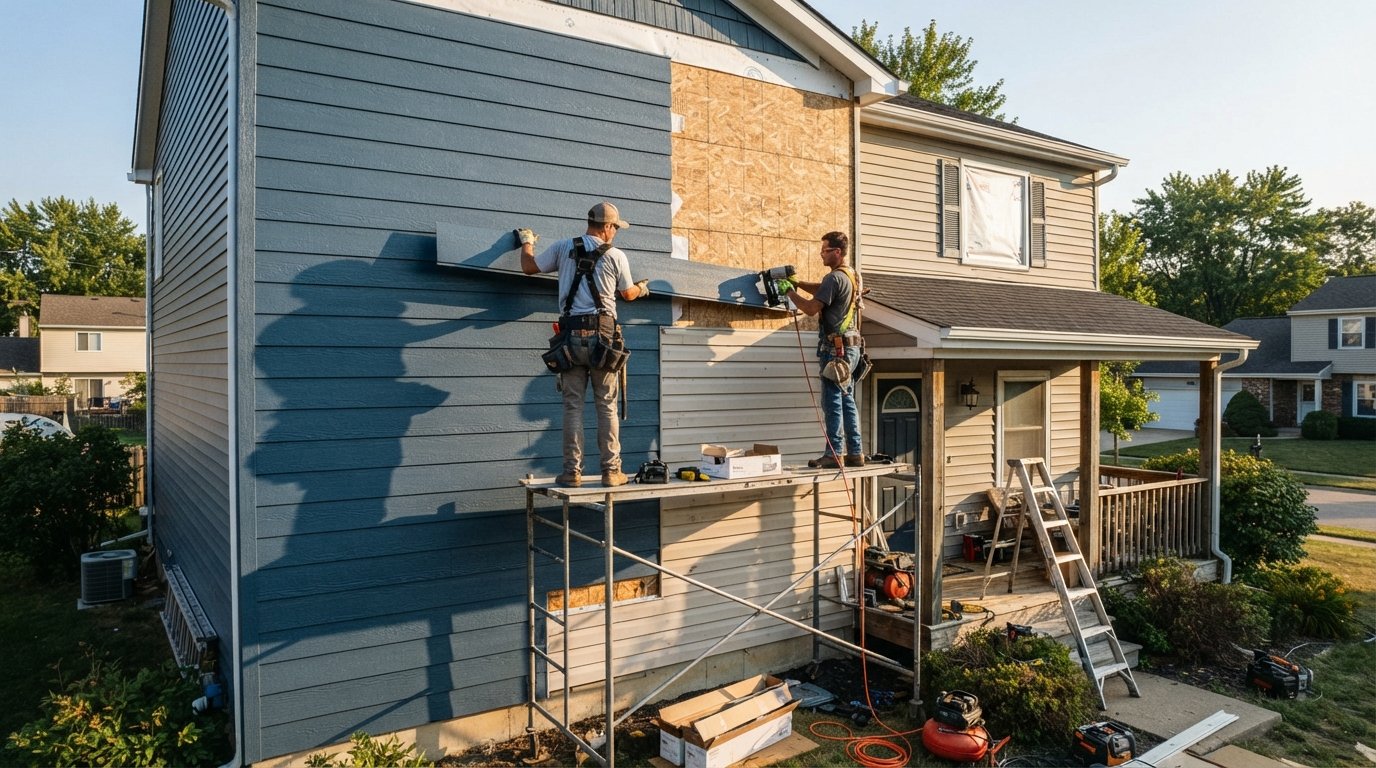
Siding covers more square footage than any other exterior surface, so replacing it transforms the entire facade at once. A home with faded vinyl in a builder-grade beige can look decades newer with fiber cement boards in a deep slate blue, or with engineered wood in a warm cedar tone. The change is not just color: it is texture, shadow line, and profile. Horizontal lap siding reads as traditional and horizontal, while vertical board-and-batten reads as modern farmhouse, and shingle-style panels add coastal or craftsman character. Material choice matters as much as color. Fiber cement resists rot, pests, and fire, and holds paint far longer than wood. Insulated vinyl offers a budget-friendly path to a similar look with added thermal performance. Engineered wood provides the authentic grain of real wood with better dimensional stability.
Cost-to-value ratios for siding are among the strongest in exterior remodeling. National remodeling cost studies consistently place fiber cement siding replacement near the top of midrange projects for resale return, often recovering a large majority of the project cost. The visual payoff is immediate, and the maintenance savings compound over time. If your existing siding is chalky, warped, or patched in multiple places, replacement is usually smarter than another round of paint. A professional contractor can also inspect the sheathing and flashing behind the old siding, catching water intrusion before it becomes a structural problem. For homeowners comparing options, the key is to match the siding profile to the home's architecture rather than chasing trends. A 1920s bungalow rarely benefits from vertical modern panels, and a new-build contemporary can look confused under traditional lap boards.
One practical note: siding projects pair well with window replacement, because the trim and flashing work overlaps. If your windows are nearing the end of their life, bundling the two projects can reduce labor costs and deliver a more cohesive result. That kind of sequencing is exactly the sort of planning that pays off when you request quotes from multiple contractors rather than hiring the first bidder.
Front Door Replacement: Small Square Footage, Outsized Influence
The front door is the focal point every visitor sees first, and it is proportionally tiny compared to the rest of the facade. That combination makes it one of the highest leverage upgrades available. A solid wood door in a rich stain, a fiberglass door with a deep panel profile, or a steel door with a modern horizontal window can shift the entire style of the entry in a single afternoon. Color choices matter here too: a door in a contrasting hue (think navy on a white house, or warm wood on a gray house) creates a deliberate visual anchor that paint alone cannot achieve. Door replacement also tends to score well in cost-to-value studies, often returning more than the project cost at resale because buyers notice entryways immediately.
Hardware is the multiplier. A new door with builder-grade brass knobs still reads as ordinary, while a substantial handle set in matte black or satin nickel, paired with a matching kickplate and house numbers, signals quality before anyone steps inside. Consider the entry as a composition: door, sidelights, hardware, lighting, and house numbers should feel intentional together. A licensed contractor can help you confirm that the door frame, threshold, and weatherstripping are properly sealed, which matters for energy efficiency as much as for looks. If you are also refreshing paint around the entry, timing the door installation with favorable weather is worth planning, and this exterior painting preparation and weather timing guide explains how to coordinate those schedules so the new door and fresh trim cure properly.
Porches, Columns, and Trim: Fixing Proportions Changes Everything
Many homes suffer from undersized architectural elements. Thin porch columns, narrow trim boards, and shallow overhangs make a house look flimsy, even when it is structurally sound. Upgrading to properly scaled columns (square craftsman posts, tapered round columns, or wrapped structural posts with a substantial base and capital) changes the visual weight of the entry and can make a modest home feel more substantial. The same principle applies to trim: wider fascia boards, deeper crown molding at the roofline, and beefier window casings create shadow lines that read as quality from the street. These are not expensive changes relative to siding or windows, but they alter the proportions that the eye uses to judge a house.
Porch refreshes also deliver functional value. Replacing worn deck boards, tightening railings to code, and adding a proper stair rail improves safety and usability. If the porch is covered, repairing or replacing the ceiling and adding recessed lighting extends the space into evenings. For homeowners who want a visible upgrade without a full addition, reworking the porch and entry sequence is often the smartest move. A contractor can assess whether existing columns are structural or decorative, which determines how much freedom you have to change their size and style. It is also a good moment to check for rot at the column bases and ledger boards, common failure points in older porches.
Trim upgrades pair naturally with roofing and gutter work, since fascia and soffit are part of the same assembly. If your roof is due for replacement, coordinating new fascia and trim at the same time avoids paying for scaffolding twice and produces a cleaner finished edge.
Windows, Shutters, and Trim: Modernizing the Face of the House
Windows occupy a large share of the facade, and their style, trim, and surrounding details do as much visual work as the glass itself. Replacing old single-pane windows with energy-efficient double-pane units improves comfort and lowers utility bills, but the aesthetic shift is equally important. Wider window profiles, divided lites in the right pattern, and proper exterior trim can make a plain facade look custom. Shutters are a low-cost, high-visibility addition, provided they are sized correctly: shutters should look as though they could actually cover the window, which means roughly half the window width each. Undersized decorative shutters are one of the most common curb appeal mistakes, and correcting them is inexpensive.
Window trim choices signal style. Flat casing reads modern and minimal, while layered or crown-topped casing reads traditional. Color strategy matters too: trim that contrasts with siding highlights the window openings, while trim that matches siding creates a quieter, more monolithic look. For homeowners in hot climates, low-e glass and proper shading reduce solar heat gain, and for cold climates, triple-pane options and careful air sealing prevent drafts. Window replacement also tends to perform well in cost-to-value terms, though the return varies by climate and local market. The important point is that windows, shutters, and trim should be planned as one composition rather than three separate purchases made years apart.
If you are unsure where to start, request quotes for window replacement and ask each contractor to walk through trim and shutter options at the same time. Comparing several bids side by side makes it easier to spot which upgrades add real value and which are upsells.
Garage Doors and Roofing: The Overlooked Workhorses
The garage door is often the largest flat surface on the front of a house, yet it is frequently ignored. A new door in a carriage-house style, a modern flush panel, or a full-view glass design can transform a facade more dramatically than almost any other single element. Modern insulated doors also improve energy performance and operate more quietly. Roofing plays a similar role: it is a huge visual plane, and the choice between architectural shingles, metal, and tile changes the character of the home. A dark architectural shingle can make a house look grounded and substantial, while a standing-seam metal roof reads clean and contemporary. Both garage doors and roofing are major purchases, but both score reasonably well in resale value studies and both address functional needs (weather sealing, insulation, drainage) at the same time.
These two projects also interact with everything else. A new roof often justifies new gutters, fascia, and soffit, and a new garage door can make fresh siding or paint look intentional rather than partial. Planning them together, rather than as isolated replacements, produces a more coherent result and can reduce total labor. For homeowners managing a budget, the practical approach is to prioritize the projects that are both visible and urgent: a leaking roof or a garage door that no longer seals should come before purely cosmetic work.
Which Exterior Projects Offer the Best Cost-to-Value Ratio?
Not every upgrade returns the same at resale, and the ranking shifts with climate, neighborhood, and market conditions. Still, national remodeling impact studies consistently show a cluster of exterior projects at the top of the list. The following are the ones most often cited for strong resale returns, along with their primary visual benefit:
- Siding replacement: transforms the entire facade and improves weather resistance; typically among the highest percentage of cost recovered at resale.
- Garage door replacement: a large, highly visible surface with a strong return, especially in markets where curb appeal drives offers.
- Front door replacement: small project, outsized visual impact, and consistently strong cost recovery.
- Window replacement: improves energy performance and modernizes the facade; returns vary by climate but are generally solid.
- Roof replacement: necessary for function, and a new roof reassures buyers; value depends heavily on material choice.
The pattern is clear: projects that change large visible surfaces or key focal points tend to perform best. Paint and landscaping still matter, but they sit on top of these structural decisions. A house with new siding, a proper entry, and well-scaled trim will look good even with modest landscaping, while a house with beautiful gardens and failing siding will still read as a project to buyers.
Sequencing and Budgeting Your Exterior Upgrades
Most homeowners cannot do everything at once, so sequencing matters. The general logic is to fix function first (roof, drainage, siding integrity), then address the largest visual surfaces (siding, garage door, windows), then refine the details (door hardware, shutters, trim, lighting). Doing the details before the big surfaces often wastes money, because new trim installed against failing siding will have to come off again. A sensible order looks like this:
- Address structural and water issues: roof, flashing, gutters, and any rot behind siding.
- Replace or repair the largest surfaces: siding, windows, and garage door.
- Upgrade focal points: front door, porch columns, and entry hardware.
- Refine details: shutters, trim, lighting, and house numbers.
- Finish with paint and landscaping to unify the result.
Budgeting follows the same logic. Exterior projects are vulnerable to hidden conditions (rot, outdated wiring for exterior lighting, improper flashing), so a contingency of 10 to 20 percent is wise. Getting multiple quotes is the single most effective way to control costs and spot contractors who are padding estimates. Platforms like ContractorHomeQuotes help homeowners compare bids and understand typical pricing before committing, which is especially useful for large exterior projects where estimates vary widely. The goal is not the cheapest bid but the most complete one, with clear line items for materials, labor, permits, and cleanup.
Finally, think about maintenance after installation. Fiber cement needs repainting eventually, wood needs sealing, and metal roofs need occasional inspection. Choosing materials with maintenance requirements you will actually keep up with is part of getting real value from the upgrade. A contractor who explains the maintenance schedule up front is usually a contractor worth hiring.
The highest impact exterior upgrades beyond paint and landscaping are the ones that change what the house fundamentally looks like: its surfaces, proportions, and focal points. Siding, doors, porches, windows, garage doors, and roofing each do work that paint cannot, and they tend to hold value in ways cosmetic updates do not. Start with the projects that are both urgent and visible, sequence them so the details come last, and compare multiple quotes before signing. Done in the right order, these upgrades do not just improve curb appeal; they change how the home is perceived, lived in, and valued.